
My Talking Tom Friends 2
Outfit7 LimitedCasual
4.41.37K Reviews
- Version
- 26.4.1.25615
- Installs
- 50.00M
- Age Rating
- Everyone
Screenshots
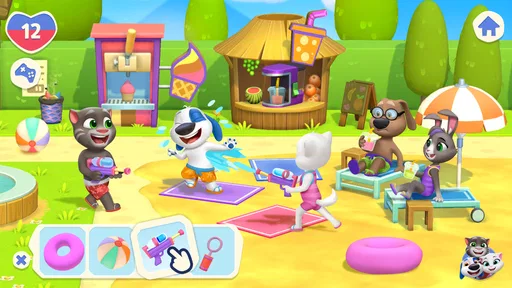
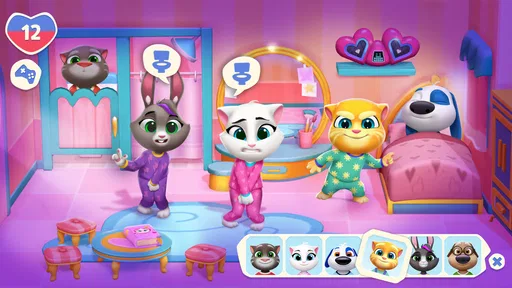
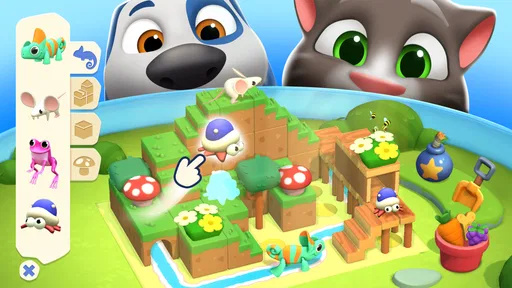
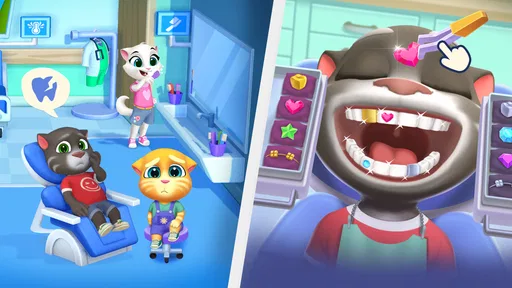

Our Review of My Talking Tom Friends 2
 Analysis by Appyee
I enjoy casual games that let me have a pleasant few minutes without demanding a long tutorial, a complicated strategy, or a perfect run. My Talking Tom Friends 2 aims directly at that mood. It puts Talking Tom and his friends together as virtual pets, then fills the time with small activities, mini games, and simple moments of interaction. After spending time with it, I found its strongest quality was not depth but accessibility: I could open it, do something enjoyable almost immediately, and leave without feeling that I had abandoned a major task.
That makes it a natural fit for short breaks, especially when I want something lighter than a full adventure game. It is a free casual game from Outfit7 Limited, rated for Everyone, and it has already reached over 50 million installs. Its average rating sits at 4.4 from around 162 thousand ratings, which matches my overall impression: this is a broadly appealing virtual-pet experience, though its charm depends heavily on whether you enjoy repeating small care routines and playful interactions.
How the game feels in the first few minutes
The opening appeal is easy to understand. Rather than controlling a single character through a long level, I spend time with a group of familiar animated pets. The basic pleasure comes from seeing what they are doing, responding to them, and moving between activities without a demanding objective hanging over me. The game feels more like a digital playroom than a traditional campaign.
That distinction matters. If I approach it expecting a substantial platformer or a story-driven adventure, I will probably find the experience too light. If I want a friendly screen companion that offers bite-sized entertainment, the design makes much more sense. The characters provide the immediate hook, while the mini games and pet interactions give me reasons to stay for another minute.
I also like that the game does not require me to understand a complex system before having fun. The activities are approachable, and the overall presentation is aimed at quick recognition rather than mastery. A child can enjoy the characters and simple play, while an older player may appreciate the low-pressure rhythm. The Everyone age rating reflects that broad positioning.
There is a useful emotional difference between this and many casual games built around constant failure. Here, the appeal is usually not beating an opponent or protecting a long streak. I can simply check in, play with the pets, and move on. That makes the first session comfortable, but it also reveals the main question I kept asking: will the routine remain enjoyable after the novelty fades?
A good match for small gaps in the day
My favorite use case is an ordinary waiting period. Suppose I have a few minutes before leaving home, or I am waiting for food to arrive. I can open the game, interact with the characters, try a mini game, and stop when the moment is over. I do not need to reserve a full half-hour or remember a complicated chain of objectives.
That short-session clarity is one of the game’s most practical strengths. The next action is usually obvious because the experience is built around the pets and the activities immediately available around them. I am not spending my limited break searching through menus to work out what matters.
It also works well as a shared screen activity. A younger player can choose which character to visit or which activity to try, while an adult can help with navigation without needing to explain complicated rules. I would still recommend that parents make their own decision about device use and purchases, but the game’s gentle tone is much more suitable for family settings than a competitive title filled with intense pressure.
For adults, the appeal is narrower but still real. I would recommend it to someone who likes virtual pets, animated characters, and small interactive toys. I would not recommend it to a player who needs constant novelty, intricate progression, or a strong sense of accomplishment after every session. The game offers comfort and immediacy more reliably than challenge.
The rhythm of caring, playing, and leaving
The central rhythm is easy to settle into. I move between spending time with the pets and trying the available mini games. The activities break up the routine, while the characters give the session a personal feel instead of making it seem like a collection of unrelated taps.
What works well is the lack of a heavy commitment. I can approach the game with a vague intention such as “I will check on the friends” and still find enough to do. This is different from a puzzle game where I might need to finish a stage before stopping, or a management game where leaving at the wrong moment can feel inefficient.
That flexibility is especially valuable on a phone. Mobile play often happens in awkward fragments: on public transport, during a short break, or while waiting for an appointment. A game that respects those fragments has an advantage even when its individual activities are simple. In my experience, this one understands that kind of use better than many casual alternatives.
The mini games are important because they provide a change of pace. Without them, the pet interactions could feel like a brief novelty rather than a repeatable pastime. They give my hands something more active to do, even if they do not transform the game into a demanding arcade collection. I see them as seasoning rather than the main meal.
Why the first session is smoother than later sessions
Early on, curiosity does much of the work. I want to see how the group behaves, what kinds of interactions are available, and how the different activities fit together. That discovery period gives the game a pleasant sense of movement, even though the controls and goals remain simple.
Later, the experience becomes more dependent on my affection for the characters. Once I understand the basic loop, I am no longer exploring a new system every minute. I am returning because I like the familiar cast and enjoy the act of checking in. This is not a flaw by itself, but it is an important trade-off: the game’s replay value is emotional and routine-based more than skill-based.
I found it helpful to treat each visit as a small play session rather than trying to extract maximum value from it. If I stay too long while waiting for the game to surprise me constantly, the repetition becomes more noticeable. If I open it for a focused burst, the same structure feels much more comfortable.
A practical tip is to choose one purpose before opening the game. I might decide to spend time with a favorite pet, play a mini game, or simply look around for a minute. This prevents the session from turning into aimless tapping and makes the lightweight design feel intentional.
How well it handles interruptions
This is where the game’s casual identity becomes especially useful. I can treat it as an activity that fits around real life rather than one that demands my full attention. If a message arrives, someone calls me, or my break ends, I do not feel as though I have ruined a carefully prepared attempt.
That interruption tolerance is one of the reasons I would choose it over a more competitive mobile game for a busy day. There is no appeal in forcing myself to continue when I need to put the phone down. The game’s value comes from being available when I want it, not from punishing me for leaving.
Still, I would not confuse low pressure with complete frictionlessness. Any game centered on repeated interactions can become less compelling if I return without a clear reason. The absence of urgency is relaxing, but it can also reduce momentum. I sometimes enjoyed the freedom to stop, then found that the same freedom made it easy to close the game without feeling drawn back immediately.
For younger players, this pause-friendly structure can be useful because an adult can end the session without interrupting a difficult level or a competitive match. For older players, it means the game works better as a background pastime than as the main focus of an evening.
Returning after a few hours or a day
The return experience depends on what I want from a virtual-pet game. If I am looking for a familiar group of characters and a quick set of activities, coming back is straightforward. I do not need to relearn the controls or remember a complicated story. The game’s identity is stable, which makes it easy to pick up again.
If I am expecting every return to reveal a major new event, I may be disappointed. The appeal is in the continuity of the pet world, not in a constant stream of dramatic developments. That makes the game suitable for players who enjoy routine, but less suitable for anyone who measures replay value by large unlocks or changing challenges.
I also think the best return habit is to avoid turning the game into a chore. The moment I feel obligated to complete a checklist rather than wanting to see the characters, the charm weakens. Its casual design works best when I use it as a pleasant option, not as another daily responsibility.
Repetition, replay value, and the point where charm fades
Repetition is unavoidable in a virtual-pet game. The same broad idea must support many visits: interact with the characters, enjoy small activities, and return later. The question is whether those repeated actions remain pleasant enough to justify opening the app again.
For me, the answer is “yes, in moderation.” The characters give the routine a warmer feeling than a bare collection of mini games. I am not only chasing a score; I am spending time in a playful environment. That difference can keep a simple action enjoyable for longer than its mechanics might suggest.
However, the game is not a strong choice if I need deep replayability. A dedicated puzzle game will usually offer more room for improvement, while an arcade game may provide clearer score targets. A larger simulation may also give me more systems to manage. This title sits on the gentler side of the casual category, and its limitations are connected directly to that choice.
One non-obvious trade-off is that the group format can make the experience feel fuller at first but less focused later. Having several friends creates variety and a sense of a shared space, yet it can also make my attention feel scattered. When I wanted a specific, goal-oriented activity, the broad pet-room approach was less satisfying than a game built around one polished mechanic.
Another useful observation is that the mini games should not be judged as if they were a separate premium collection. Their job is to refresh the pet routine, not necessarily to become the reason I play for hours. If I treat them as short diversions, they fit well. If I expect every one to support long-term mastery, the limitations become clearer.
How to get more from the simple design
I found three habits that improve the experience. First, I keep sessions short enough that the interactions still feel inviting. Second, I vary my focus instead of repeating the same action continuously. Third, I let the game complement my day rather than compete with more demanding games.
That approach also helps with purchases. The game is free to play, with in-app items priced from $4.99 to $16.99 each. I would begin without spending anything and decide only after I understand whether the basic routine genuinely fits my habits. Paying cannot solve a mismatch between a player and the game’s repetitive structure, so the free starting point is useful for making that judgment.
Parents may want to establish a simple rule before handing over the device, especially if a child is enthusiastic about the characters. The game is designed for Everyone, but an age rating does not replace family preferences about screen time or purchases. In my view, clear expectations are more helpful than assuming the gentle presentation will automatically manage every situation.
Performance, access, and everyday practicality
The current version is 26.4.1.25615, and the listed minimum operating system is Android 6.0. That makes the game accessible to a wide range of Android devices, including phones that are not running the newest software. I would still judge the experience on the specific phone in hand, because a supported operating system does not guarantee identical smoothness across every device.
Its free entry point is another practical advantage. I can try the core experience before deciding whether it deserves a regular place on my phone. That is particularly important here because the main question is personal taste. Some players will immediately enjoy the friendly pet routine; others will recognize within one session that they need more challenge.
The game is also easy to explain to another person. I do not need to describe a complicated objective or a long progression path. I can simply say that it is a casual virtual-pet game with Talking Tom and friends, small activities, and mini games. That clarity helps when recommending it to a child, a family member, or a friend looking for something low-pressure.
Its large audience suggests that the formula has broad reach, with around 1.4 thousand written reviews adding more detailed reactions alongside the overall rating. I do not treat popularity as proof that it will suit me, but it does show that the basic combination of recognizable characters and accessible play has strong appeal.
Who should choose it, and who should skip it
I would choose this game for a player who wants immediate, low-stakes entertainment; enjoys virtual pets; prefers short sessions; or likes sharing a colorful game with a younger family member. It is also a reasonable option for someone who finds competitive mobile games tiring and wants a softer alternative.
I would skip it if I want a robust story, complex strategy, precise controls, or a clear ladder of increasingly difficult challenges. Players who dislike repeating care routines may also lose interest quickly. Likewise, anyone looking for a mini-game collection with substantial depth in every activity will probably be happier with a more specialized title.
The most important decision is whether the characters themselves are enough to support the routine. If they are, the simple structure becomes relaxing. If they are not, the lack of deeper systems will stand out. That is the central dividing line, and it is more useful than judging the game by its free price or its familiar name.
My casual verdict after living with the routine
My Talking Tom Friends 2 succeeds when I use it for what it is: a friendly, interruption-tolerant game for brief visits with virtual pets. It gives me an immediate reason to play, keeps the controls approachable, and uses mini games to prevent every session from feeling identical. I especially value the fact that I can stop without losing the point of the experience.
Its weakness is equally clear. Once the initial curiosity has passed, replay value depends on enjoying the characters and the routine rather than chasing deep mastery. Some players will find that comforting; others will find it repetitive. The in-app purchase range also makes it sensible to test the free experience carefully before spending.
Outfit7 Limited has made a game that fits neatly into small spaces in the day. I would recommend it to someone who wants a cheerful virtual-pet companion and understands that the pleasure comes from light interaction, not demanding progression. I would not present it as a replacement for a deeper casual game, but as a gentler choice for moments when I want quick entertainment and an easy exit.
My final recommendation is therefore positive but specific: try it when you want a few relaxed minutes, keep expectations focused on charm and variety, and pay attention to whether the routine still feels enjoyable after the novelty settles. The best reason to keep playing is not pressure or complexity, but the simple pleasure of checking in with the friends.
Verdict
Strengths of My Talking Tom Friends 2
- Fun mix of pet care, mini-games, and home customization
- Several characters create varied interactions and activities
- Bright, colorful graphics are appealing to younger players
- Simple controls make it easy for children to play
- Regular tasks provide short, casual play sessions
Limitations of My Talking Tom Friends 2
- Frequent prompts may encourage in-app purchases
- Progress can feel repetitive after extended play
- Some features require waiting or watching advertisements
- The game may consume noticeable storage and battery
- Online features and ads may not suit younger children
Other Releases by Outfit7 Limited
View All
My Talking Angela
Casual4.2

My Talking Tom
Casual4.3

My Talking Tom 2: Pet Game
Casual4.3

Talking Tom: Hero Dash Run
Action4.3
Similar Picks in This Category
View AllMy Talking Angela
Outfit7 Limited4.2
My Talking Tom
Outfit7 Limited4.3

Pou
Zakeh4.2
My Talking Tom 2: Pet Game
Outfit7 Limited4.3

Candy Crush Saga
King4.6

Bridge Race
Supersonic Studios LTD4.1
Frequently Asked Questions
What is My Talking Tom Friends 2?
My Talking Tom Friends 2 is a casual virtual-pet game where you look after a group of familiar Talking Tom characters in a shared home. You can feed them, keep them clean, choose outfits, play mini-games, decorate rooms, and complete everyday activities. It is designed for relaxed, family-friendly play, although younger children may need guidance with advertisements and optional purchases.
Can My Talking Tom Friends 2 be played offline?
Some basic activities may remain available without an internet connection, but the complete experience generally works best online. Internet access can be needed for advertisements, special events, updated content, cloud-related features, and certain rewards. Offline availability may also vary between Android and iOS versions, so it is worth testing the game after installation rather than assuming every feature will work without Wi-Fi or mobile data.
Does My Talking Tom Friends 2 contain ads or in-app purchases?
Yes, players should expect advertising and optional in-app purchases. Ads may appear between activities or offer extra rewards, while purchases can provide in-game currency, cosmetic items, or other conveniences. The game can usually be enjoyed without spending money, but younger players may be tempted by promotional offers. Parents should review device purchase settings and enable password or biometric confirmation before allowing children to play.
Is My Talking Tom Friends 2 suitable for children?
The game uses colorful characters, simple controls, and gentle daily-care activities, making it accessible to many children. However, it is not completely free from commercial elements, including advertisements, reward prompts, and optional purchases. Parents should check the age rating shown in their region, supervise early play sessions, and adjust privacy, notification, and purchase settings to create a safer and less distracting experience.
What devices are compatible with My Talking Tom Friends 2?
My Talking Tom Friends 2 is released for Android and iOS, but compatibility depends on the operating system version, available storage, and the device’s performance. Older phones and tablets may experience slower loading, reduced visual performance, or limited support after future updates. Before downloading, check the official Google Play or App Store listing for the current requirements and make sure sufficient free storage is available.
Play our best games!


